Every day in the United States, about 6,000 women enter menopause. Most reach this milestone around age 51, but the journey begins years earlier during perimenopause.
The numbers tell a powerful story that traditional medicine has largely ignored.
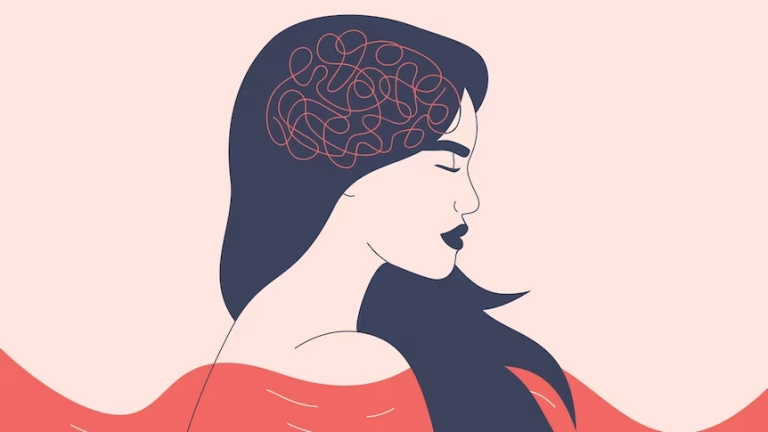
Up to 70% of women experience psychological symptoms during these hormonal transitions. We’re not just talking about hot flashes and night sweats. Many women struggle with anxiety, depression, irritability, brain fog, sleep disruption, and a loss of confidence. These changes ripple through every part of life — relationships, work, and overall well-being.
Yet the majority of treatment approaches continue to address symptoms in isolation, leaving women piecing together care on their own.
The Problem with Traditional Healthcare
The root problem lies in the way women’s healthcare has been structured for decades. Medicine has long operated in silos:
- Gynecologists focus on reproductive health.
- Primary care doctors manage general medical needs.
- Mental health professionals address mood symptoms.
- Endocrinologists may look at thyroid or diabetes.
Each specialist sees only a small piece of the bigger picture. Rarely is there a comprehensive view of how hormonal fluctuations create cascading effects across multiple body systems.
This fragmented model leaves women managing symptoms individually instead of treating the underlying cause: hormonal imbalance.
Why Hormones Matter More Than We Realize
Hormones are not just about fertility and menstruation — they influence nearly every system in the body. Estrogen, progesterone, testosterone, and other key hormones regulate:
- Brain chemistry and mood stability
- Sleep quality and circadian rhythm
- Metabolism and body composition
- Bone density and cardiovascular health
- Energy, libido, and overall vitality
When these hormones shift — as they do in perimenopause, menopause, and beyond — the impact can be profound. Women often describe the experience as “feeling like a stranger in my own body.”
Unfortunately, conventional medicine tends to normalize these symptoms as “just part of aging” rather than recognizing them as signs of a system out of balance.
The Case for Bioidentical Hormone Replacement Therapy (BHRT)
One of the most powerful solutions available is bioidentical hormone replacement therapy (BHRT). Unlike synthetic hormones, bioidenticals are structurally identical to the hormones your body produces. This means your body can recognize and use them more naturally.
BHRT allows us to restore balance in a way that feels aligned with how your system is meant to function. When implemented thoughtfully, BHRT can:
- Improve mood stability and reduce anxiety or depression
- Restore sleep patterns
- Support metabolism and weight regulation
- Increase energy and mental clarity
- Protect long-term health by reducing risks associated with bone loss and cardiovascular decline
The benefits go far beyond “managing symptoms.” BHRT works at the root level, supporting women’s health and quality of life at every stage.
Why Women Need a Reconstructed Approach
The current medical system often assumes that hormonal symptoms need only hormonal solutions, while psychological or physical changes should be treated separately. This kind of binary thinking ignores the interconnected nature of women’s health.
Consider a typical patient journey:
- A woman experiencing irregular cycles, fatigue, and mood swings visits her gynecologist. She may receive a prescription or be told to “wait it out.”
- She then seeks help from a primary care provider for weight gain or sleep problems.
- Later, she may be referred to a mental health professional for depression or anxiety.
Each provider works in isolation, with little to no communication between them. The woman is left to coordinate her own care, often without a clear understanding of how her symptoms are all connected.
This approach is not only inefficient — it’s ineffective.
Building a Comprehensive Hormonal Health Model
Women need a healthcare framework that recognizes hormones as central to overall well-being. A comprehensive model should include:
- Thorough Assessment:Detailed history-taking, lifestyle evaluation, and comprehensive lab testing to fully understand hormonal status.
- Personalized Treatment Protocols:Tailored BHRT plans that address each woman’s unique hormonal profile, combined with nutrition, lifestyle, and stress management support.
- Ongoing Monitoring:Regular follow-ups, lab work, and patient feedback to ensure treatment remains safe, effective, and responsive to changes over time.
- Whole-Person Care:Recognizing that hormones influence not only physical health but also mental, emotional, and relational well-being.
By treating the woman, not just the symptom, we create space for true healing and transformation.
Evidence-Based Outcomes
Studies show that women on bioidentical hormone replacement therapy often experience measurable improvements within three to six months. These improvements include:
- Reduced hot flashes, night sweats, and sleep disturbances
- Significant mood stabilization
- Better energy and cognitive clarity
- Improved bone density markers
- Enhanced cardiovascular risk profiles
The data is clear: when hormones are brought back into balance, quality of life improves dramatically.
The Future of Women’s Hormonal Care
We are at a turning point in women’s healthcare. More women are demanding comprehensive solutions that honor the complexity of their bodies and experiences. They no longer accept fragmented care or the dismissal of their symptoms as “normal.”
The healthcare practices that thrive in the next decade will be those that embrace integrated hormonal medicine — providers who understand that women deserve treatment that is both evidence-based and personalized.
This shift is not just about better medicine. It’s about respect. It’s about recognizing that women’s health cannot be reduced to reproductive function alone. It’s about reconstructing a system that finally treats women as whole people.
Moving Forward
Women deserve more than temporary fixes or symptom management. They deserve care that restores balance, supports vitality, and empowers them through every stage of life.
By rebuilding hormonal healthcare from the ground up — with bioidentical therapy, personalized protocols, and comprehensive support — we can finally give women the healthcare revolution they’ve been waiting for.

Somer Schreiber-Small, FNP-C, MSCP, ABHRT
Hi, I’m Somer Schreiber-Small, FNP-C, MSCP, a Nurse Practitioner specializing in weight loss, hormone therapy, aesthetics, and functional medicine—but I’m also a woman who’s been where you are.
I know what it’s like to feel tired all the time, struggle with weight that won’t budge, battle brain fog, and feel like yourself one day and a completely different person the next. I’ve been there—frustrated, searching for answers, and told everything was “normal” when I knew deep down it wasn’t.
Like many women, I didn’t realize my symptoms were caused by hormonal imbalances until I dug deeper. Once I balanced my own hormones and lost over 65 pounds, everything changed. I had more energy, my mood stabilized, the weight finally came off, and I felt like myself again. That experience ignited my passion for helping other women take back control of their health.
Could It Be Your Hormones?
Hormonal imbalances can show up in so many ways, including:
❌ Unexplained weight gain (especially around the belly)
❌ Fatigue, no matter how much you sleep
❌ Brain fog and trouble concentrating
❌ Mood swings, anxiety, or depression
❌ Low libido and vaginal dryness
❌ Irregular periods or worsening PMS
❌ Hair thinning or… Read more