
Synopsis: This article explains how estrogen decline during menopause directly disrupts fibroblast activity, collagen and elastin production, moisture retention, and microcirculation — creating measurable structural changes in skin that no topical moisturizer or synthetic filler can reverse at the cellular level. It introduces PRP facials combined with microneedling as a regenerative alternative that uses concentrated growth factors from the patient’s own blood to stimulate genuine collagen synthesis and tissue repair through microchannels in the dermis, with results accumulating over three months of remodeling, and argues that pairing this approach with hormone optimization addresses both the visible changes and the underlying hormonal driver simultaneously for compounding, lasting improvement.
Top 5 Questions Answered:
- How does estrogen decline structurally alter skin composition during menopause beyond surface-level dryness?
- Why do synthetic fillers fail to restore the skin quality that hormonal changes have compromised?
- How does PRP combined with microneedling stimulate collagen regeneration from within rather than adding temporary volume?
- What does the recovery and results timeline look like from treatment through peak collagen remodeling?
- How does combining hormone optimization with PRP facials produce compounding improvements over standalone aesthetic treatments?
Your skin thinning during menopause isn’t imaginary. It’s hormonal.
Estrogen decline doesn’t just trigger hot flashes and mood shifts. It directly impacts collagen synthesis in your skin. The result shows up as thinning texture, deepening lines, and loss of elasticity that no moisturizer can reverse.
I’ve worked with menopausal women for over two decades, and the skin concerns are remarkably consistent. The frustration is equally universal when conventional solutions fall short.
The Mechanism Behind Menopausal Skin Changes
Estrogen regulates multiple skin functions simultaneously.
It stimulates fibroblasts, the cells responsible for collagen and elastin production. It maintains skin thickness through cellular proliferation. It supports the skin’s moisture retention capacity and microcirculation.
When estrogen levels drop during menopause, all these functions decline in parallel.
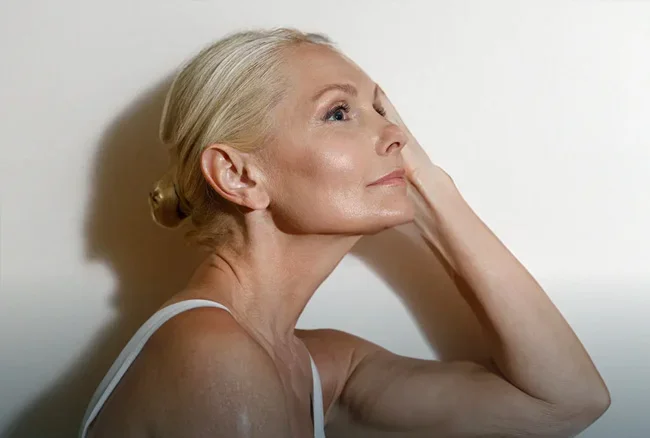
The skin becomes thinner, drier, and less resilient. Fine lines deepen into wrinkles. The texture changes from firm to crepe-like. Areas that once looked smooth now show every expression line.
You’re not imagining these changes. They’re measurable, structural alterations in your skin’s composition.
Why Synthetic Fillers Miss the Point
Most women facing these changes turn to injectable fillers.
Fillers add volume. They plump lines temporarily. They create an illusion of fullness where tissue has thinned.
But they don’t address the underlying problem.
Your skin isn’t just losing volume. It’s losing its ability to regenerate and maintain itself. Adding synthetic material on top of compromised tissue doesn’t restore the skin’s natural function.
The volume returns, but the quality doesn’t improve.
How PRP Facials Target Hormonal Skin Damage
Platelet-rich plasma facials work differently.
The treatment uses your own blood, processed to concentrate the platelets that contain growth factors. These growth factors signal your skin cells to increase collagen production, accelerate cellular turnover, and improve tissue quality.
We combine the PRP with microneedling to enhance absorption and stimulate the skin’s natural healing response.
The microneedles create controlled micro-injuries in the skin. Your body responds by ramping up collagen synthesis and tissue repair. The PRP amplifies this response by delivering concentrated growth factors directly to the treatment areas.
The combination triggers regeneration rather than simply adding temporary volume.
What Happens During Treatment
The process starts with a blood draw, similar to routine lab work.
I process your blood in a centrifuge to separate and concentrate the platelet-rich plasma. This takes about 10 minutes while we prepare your skin for treatment.
The microneedling portion targets specific areas where hormonal changes show most prominently. Forehead lines, crow’s feet, cheek hollowing, jawline laxity, and neck texture all respond well to this approach.
I apply the concentrated PRP during and immediately after microneedling. The growth factors penetrate deeply through the microchannels, reaching the dermal layers where collagen synthesis occurs.
The entire treatment takes roughly 60 to 90 minutes.
The Recovery and Results Timeline
Your skin will look slightly red immediately after treatment, similar to a moderate sunburn.
This typically resolves within 24 to 48 hours. Some patients experience mild swelling that subsides quickly. The microneedling channels heal rapidly, usually within a few days.
The real changes happen beneath the surface over the following weeks.
Collagen production increases gradually. New tissue forms slowly but steadily. The improvements accumulate rather than appearing overnight.
Most patients notice initial changes around three to four weeks post-treatment. Skin texture smooths first. Fine lines soften. The overall quality improves before dramatic volume changes become apparent.
Optimal results typically appear at the three-month mark, when collagen remodeling reaches its peak.
Why Personalization Matters
Every woman’s menopausal skin changes differently.
Some experience primarily textural changes. Others lose volume more dramatically. Many deal with a combination of thinning, wrinkling, and elasticity loss in varying degrees.
I evaluate each patient’s specific concerns before recommending treatment.
The assessment includes hormone level testing, skin quality evaluation, and discussion of your particular frustrations with how your skin has changed. This information shapes the treatment plan.
Some women benefit from a single PRP session annually. Others achieve better results with a series of treatments spaced several weeks apart. The approach depends on your skin’s current condition and your aesthetic goals.
Hormone optimization often runs parallel to PRP treatments. When we address the underlying hormonal imbalance while simultaneously stimulating skin regeneration, the results compound.
Natural Regeneration vs Artificial Enhancement
The distinction matters more than most people realize.
Synthetic fillers and Botox have their place in aesthetic medicine. But for menopausal skin changes driven by hormonal decline, treatments that stimulate your body’s own regenerative capacity offer advantages that artificial volume cannot match.
PRP doesn’t just fill lines. It improves the tissue quality that hormonal changes have compromised.
The skin becomes thicker, more resilient, and better able to maintain itself. The improvements come from within rather than being applied from outside.
This aligns with how I approach all aspects of regenerative medicine. Optimize what your body does naturally rather than replacing its functions with synthetic alternatives.
The Broader Context of Menopausal Skin Care
PRP facials address visible skin changes effectively, but they work best as part of a comprehensive approach.
Hormone replacement therapy, when appropriate, can slow or partially reverse the skin changes that estrogen decline causes. Proper supplementation supports the cellular processes that maintain skin health. Targeted skincare products enhance and extend the results that regenerative treatments create.
I design programs that address menopausal concerns from multiple angles simultaneously.
The goal extends beyond making your skin look better temporarily. We’re working to restore and maintain the skin’s natural function so improvements last and build over time.
Quality of life matters. When you feel confident in how you look, it affects everything else.
What to Expect from an Evaluation
The initial consultation establishes whether PRP facials suit your specific situation.
We discuss your primary concerns, review your medical history, and examine your skin’s current condition. I explain what PRP can realistically achieve for your particular type of skin changes.
Not every patient is an ideal candidate. Some need hormone optimization first. Others benefit more from combining PRP with additional treatments.
The evaluation determines the most effective approach for your individual needs.
If we proceed with PRP, I’ll outline the treatment timeline, expected results, and any complementary therapies that might enhance outcomes. The plan is personalized based on what your skin needs and what you want to achieve.
Moving Forward
Menopausal skin changes are real, measurable, and treatable.
PRP facials offer a regenerative approach that works with your body’s natural healing capacity rather than masking symptoms with temporary volume. The treatment stimulates actual tissue improvement in areas where hormonal decline has compromised skin quality.
The results reflect genuine regeneration, not artificial enhancement.
If you’re dealing with skin thinning, texture changes, or accelerated aging that coincides with menopause, this treatment modality deserves consideration. It addresses the problem at a cellular level rather than simply covering it up.
The approach aligns with comprehensive, personalized care focused on optimizing your body’s natural functions. That’s how lasting improvements happen.

Julian Gershon Jr., D.O., FAOASM, ABAARM
Dr. Gershon is triple-board-certified in Family Medicine, Sports Medicine, and Anti-Aging and Regenerative Medicine. Dr. Gershon also holds a fellowship in Stem Cell therapy awarded by the American Academy of Anti-Aging and Regenerative Medicine. Dr. Gershon received his medical degree from Kirksville College of Osteopathic Medicine and completed his internship at Flint Osteopathic Hospital in Flint, Michigan. He is board-certified in Family Medicine and Sports Medicine by the American Osteopathic Board of Family Practice. He is also a fellow of the American Osteopathic Academy of Sports Medicine and served on their Board of Directors for twelve years.
Growing up, Dr. Gershon was very active in ski racing and several other sports, which grew his passion for working with athletes in a medical setting. Over the course of his career, he has been involved with treating numerous sports teams and truly believes in living a life that is full of physical activity.
Dr. Gershon served as the head team physician for the University of North Texas for over twenty years. He also served as a resident physician at the Colorado Springs U.S. Olympic Training Center in 1993. He was a team physician for the U.S. Olympic Judo team from 1993-2000 and… Read more