The Night I Knew Something Was Wrong
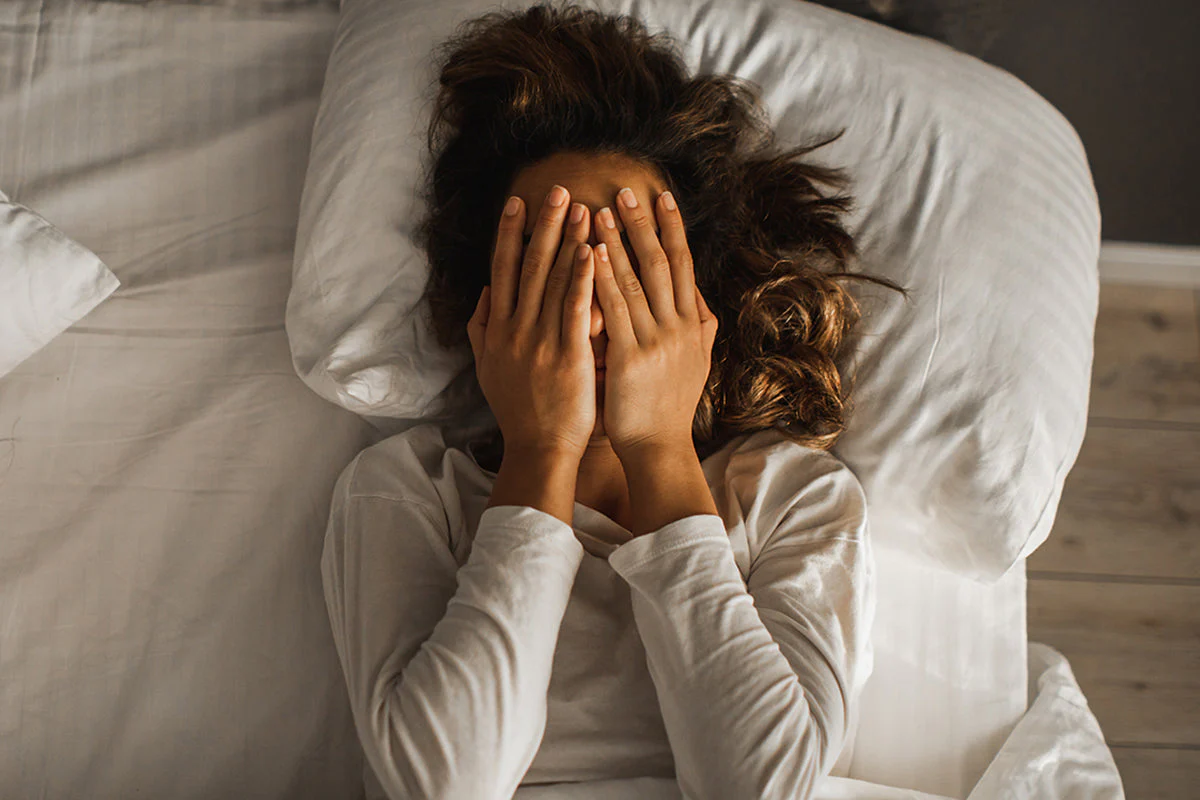
I woke up drenched. Heart racing. Dizzy. Panicked.
This wasn’t normal middle-of-the-night waking. This was my body staging a full revolt at 2 AM, and I had no idea why.
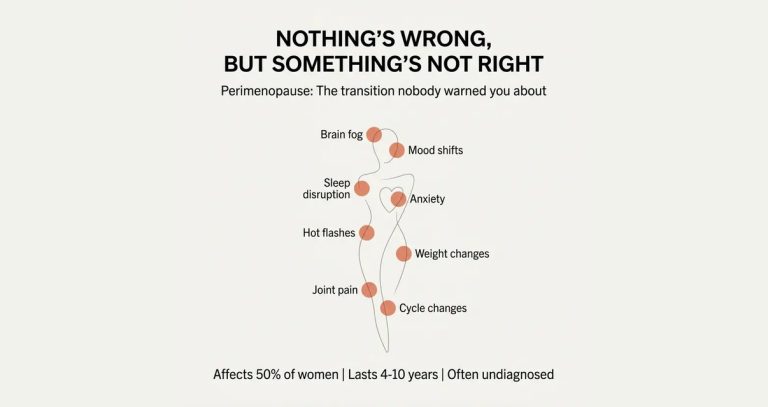
Despite my medical training, despite everything I’d learned about hormonal dysregulation, I didn’t recognize what was happening to my own body. The dizzy spells, heart palpitations, panic attacks, mood swings that came out of nowhere. I packed on 40 pounds again without changing anything.
After another trip to the hospital with zero answers, I sat down with Dr. Serena. We ran labs. The results showed severe hormone dysregulation.
It was all perimenopause.
She started me on bioidentical hormone replacement therapy (BHRT), and I regained my life. Again.
Here’s what I learned: the symptoms we don’t talk about are the ones destroying women’s lives. And sleep disturbances sit right at the center of that destruction.
Why Sleep Falls Apart During Menopause
You’re not imagining it. Your sleep really is different now.
The changes happen on multiple levels, and they all compound each other into one exhausting mess.
Estrogen Drops and Your Brain Stops Cooperating
Estrogen does more than regulate your reproductive system. It influences your brain’s temperature regulation, your stress response, and your sleep-wake cycles.
When estrogen levels decline during perimenopause and menopause, your hypothalamus (your brain’s thermostat) starts misfiring. It thinks you’re overheating when you’re not. This triggers the cascade of events we call hot flashes and night sweats.
But there’s more.
Estrogen also modulates serotonin and GABA, two neurotransmitters that help you fall asleep and stay asleep. Lower estrogen means less of these calming chemicals in your brain.
Translation: you lie awake, mind racing, body tense, unable to shut down.
Progesterone’s Disappearing Act
Progesterone has a naturally sedating effect. It’s one reason why many women feel sleepier during the second half of their menstrual cycle.
During perimenopause, progesterone often drops before estrogen does. You lose that natural sleep aid months or even years before your periods stop completely.
I see women in my practice who haven’t slept well in two years, and when we test their hormones, progesterone is barely detectable.
Cortisol Takes Over at Night
Your stress hormone, cortisol, should follow a natural rhythm: high in the morning, low at night.
But when your sex hormones destabilize, your adrenal glands often compensate by producing more cortisol. This throws off your natural rhythm. Cortisol spikes at night keep you wired when you should be winding down.
You feel tired all day, then suddenly alert at 10 PM. Or you fall asleep fine but wake up at 3 AM, mind spinning, unable to get back to sleep.
The Night Sweat Problem Everyone Talks About (But Doesn’t Understand)
Night sweats aren’t just uncomfortable. They’re sleep destroyers.
When I was in the thick of perimenopause, I’d wake up soaked through my sheets. Not damp. Soaked. I’d have to get up, change my clothes, sometimes change the sheets, and by then I was wide awake.
According to research on menopause, up to 85% of women experience hot flashes during menopause, and many of these occur at night.
Here’s what actually happens:
Your hypothalamus detects a tiny increase in core body temperature (often less than one degree). Because of low estrogen, it overreacts and triggers your body’s cooling mechanisms: blood vessels dilate, you start sweating, your heart rate increases.
The sweat cools you down rapidly. Sometimes too rapidly. You might even feel cold afterward.
This entire process disrupts your sleep architecture. You might not fully wake up during every episode, but your sleep becomes fragmented. You never reach the deep, restorative stages of sleep your body needs.
Over time, this fragmentation accumulates. You wake up feeling like you never slept at all.
The Insomnia That Doctors Dismiss
I can’t count how many women have told me their doctor said, “You’re just getting older. This is normal.”
That dismissal makes me furious.
Yes, sleep patterns change with age. But the insomnia many women experience during menopause is not a normal part of aging. It’s a symptom of hormonal dysregulation that deserves treatment.
Menopausal insomnia shows up in three main patterns:
Onset insomnia: You can’t fall asleep. You lie in bed for an hour or more, exhausted but unable to drift off.
Maintenance insomnia: You fall asleep fine but wake up multiple times during the night. Sometimes you can get back to sleep. Sometimes you can’t.
Early morning awakening: You wake up at 3 or 4 AM and can’t get back to sleep, no matter what you try.
Many women experience all three patterns at different times.
The underlying mechanisms vary. Sometimes it’s low progesterone. Sometimes it’s high cortisol. Sometimes it’s the anxiety and mood changes that come with fluctuating hormones.
Often, it’s all of the above.
What Actually Helps (Based on What I’ve Seen Work)
I’m not going to tell you to “practice good sleep hygiene” or “avoid screens before bed.” You’ve heard that advice a thousand times, and if it worked, you wouldn’t be reading this.
Here’s what I’ve seen make a real difference in my practice.
Bioidentical Hormone Replacement Therapy (BHRT)
This is what saved my sleep. And I’ve watched it transform the lives of countless patients.
BHRT replaces the hormones your body is no longer producing in adequate amounts. When dosed correctly and monitored properly, it can eliminate night sweats, stabilize mood, and restore normal sleep patterns.
I use bioidentical hormones because their molecular structure is identical to what your body produces naturally. Your body recognizes them and uses them efficiently.
For sleep specifically, progesterone is often the game-changer. I frequently prescribe it as an oral capsule taken before bed. It has that natural sedating effect that helps you fall asleep and stay asleep.
Estrogen helps too, particularly with night sweats and temperature regulation.
BHRT isn’t right for everyone. Women with certain health conditions or risk factors may not be good candidates. This is why you need to work with a provider who understands hormone replacement and can monitor you appropriately.
Addressing Cortisol Dysregulation
If your cortisol rhythm is off, no amount of hormone replacement will fix your sleep completely.
I often recommend adaptogenic herbs like ashwagandha or rhodiola to help regulate cortisol. Ashwagandha, in particular, has been shown to lower cortisol levels and improve sleep quality in clinical studies.
Magnesium glycinate before bed can also help. Magnesium supports healthy cortisol rhythms and has a calming effect on the nervous system.
Timing matters. If you’re waking up at 3 AM with your mind racing, that’s often a cortisol spike. Taking adaptogenic herbs in the late afternoon or early evening can help prevent that spike.
Targeted Supplements for Sleep Support
I’m selective about supplements. Most of what’s marketed for sleep is either ineffective or addresses the wrong problem.
Here’s what I actually use:
L-theanine: An amino acid from tea that promotes relaxation without sedation. It helps quiet the racing mind without making you groggy.
Glycine: Another amino acid that lowers core body temperature slightly and improves sleep quality. I’ve seen it help women who wake up hot during the night.
Taurine: Supports GABA activity in the brain. Particularly helpful for women who can’t shut off their thoughts at night.
I don’t typically recommend melatonin for menopausal insomnia. It helps with circadian rhythm issues, but most menopausal sleep problems aren’t circadian. They’re hormonal.
Cognitive Behavioral Therapy for Insomnia (CBT-I)
This sounds like therapy-speak, but CBT-I is one of the most effective non-drug treatments for insomnia.
It retrains your brain’s association with your bed and sleep. If you’ve spent months lying awake in bed, your brain has learned that bed equals wakefulness. CBT-I breaks that association.
The techniques include sleep restriction (temporarily limiting time in bed to match actual sleep time), stimulus control (only using bed for sleep), and cognitive restructuring (changing anxious thoughts about sleep).
It takes work. But it works.
Temperature Management
This seems basic, but it’s not.
Your bedroom should be cool. Somewhere between 60-67°F is ideal for most people.
I recommend moisture-wicking sleepwear and bedding. Regular cotton sheets trap heat and moisture. Technical fabrics designed for temperature regulation make a noticeable difference.
Some women benefit from a cooling mattress pad or pillow. I was skeptical about these until I tried one myself. It helped.
Keep a fan running, even in winter. The air circulation helps with temperature regulation and provides white noise.
What Doesn’t Work (Stop Wasting Your Time)
I need to be honest about what I see women try that doesn’t help.
Alcohol before bed: It might help you fall asleep, but it wrecks your sleep quality. You’ll wake up more during the night, and you’ll feel worse in the morning.
Over-the-counter sleep aids: These typically contain antihistamines that cause grogginess without addressing the underlying problem. They’re not designed for long-term use.
Ignoring the problem: The “just push through it” approach doesn’t work. Sleep deprivation compounds over time. It affects your mood, your cognitive function, your metabolic health, and your cardiovascular health.
Random supplements without a plan: Taking a handful of different sleep supplements without understanding what you’re trying to fix rarely works. You need a targeted approach.
The Conversation You Need to Have
If you’re not sleeping, you need to talk to a healthcare provider who takes you seriously.
Not someone who dismisses your symptoms as “just part of menopause.”
Not someone who hands you a prescription for sleeping pills without investigating why you’re not sleeping.
You need someone who will test your hormones, understand your symptoms in context, and create a comprehensive treatment plan.
When I work with patients, I run a full hormone panel: estradiol, progesterone, testosterone, DHEA, cortisol (often a four-point salivary cortisol test to see the daily rhythm), and thyroid function.
I also ask about stress, diet, exercise, and other lifestyle factors that influence sleep.
Sleep problems during menopause are multifactorial. Effective treatment addresses all the factors, not just one.
You Don’t Have to Accept This
I spent months thinking my sleep problems were just something I had to live with.
I was wrong.
You’re not supposed to lie awake at 3 AM every night. You’re not supposed to wake up drenched in sweat. You’re not supposed to drag yourself through every day feeling like you never slept.
These are symptoms. Symptoms have causes. Causes have treatments.
The women I work with often tell me they feel like they’re getting their lives back once their sleep improves. They have energy again. Their mood stabilizes. Their thinking clears. They feel like themselves.
That’s not too much to ask for.
If you’re struggling with sleep during perimenopause or menopause, know that effective help exists. You might need to advocate for yourself. You might need to find a provider who specializes in women’s hormonal health.
But the help is there.
Your sleep matters. Your quality of life matters. You matter.
And no, this is not just part of the deal.

Antje Dangel, PA-C
Antje Dangel, PA-C, is the Co-Founder, Clinical Director, and Master Injector at Eternal MedSpa in Sarasota and Venice, Florida. Originally from Berlin, Germany, she is a nationally board-certified Physician Assistant-Certified and a Florida-licensed medical provider whose clinical foundation reaches well beyond aesthetics. Her background spans women’s health, emergency medicine, high-acuity nursing, and academic medicine, including a role as a Clinical Assistant Professor at the Florida State University College of Medicine. She holds degrees in nursing from the University of South Florida and in Physician Assistant Studies from Barry University.
That women’s health foundation is part of what makes Antje especially well suited to guests navigating perimenopause, menopause, and the broader changes of healthy aging. She understands that the hormonal shifts of midlife affect far more than skin. They influence body composition, metabolic health, energy, and confidence, and she approaches each guest with that full picture in mind rather than treating a single concern in isolation.
As Clinical Director, Antje sets the clinical standards for Eternal MedSpa. She shapes the practice’s consultation process, safety protocols, provider expectations, and its natural-looking aesthetic philosophy. She is known for precise wrinkle-relaxer treatments, thoughtful dermal filler planning, facial balancing, PRP, wellness injections, IV therapy, and… Read more