
Article Insights & Reflections
Synopsis: This report explains how legacy warnings and outdated interpretations still shape access to care. It summarizes current evidence, policy debates, and the reforms that could improve outcomes for women.
Top 5 Questions Answered:
- What did past studies like the WHI actually find?
- Which warnings are outdated and why?
- How do policies affect access to safe therapies?
- What does current evidence say about HRT safety?
- How might guideline changes improve care?
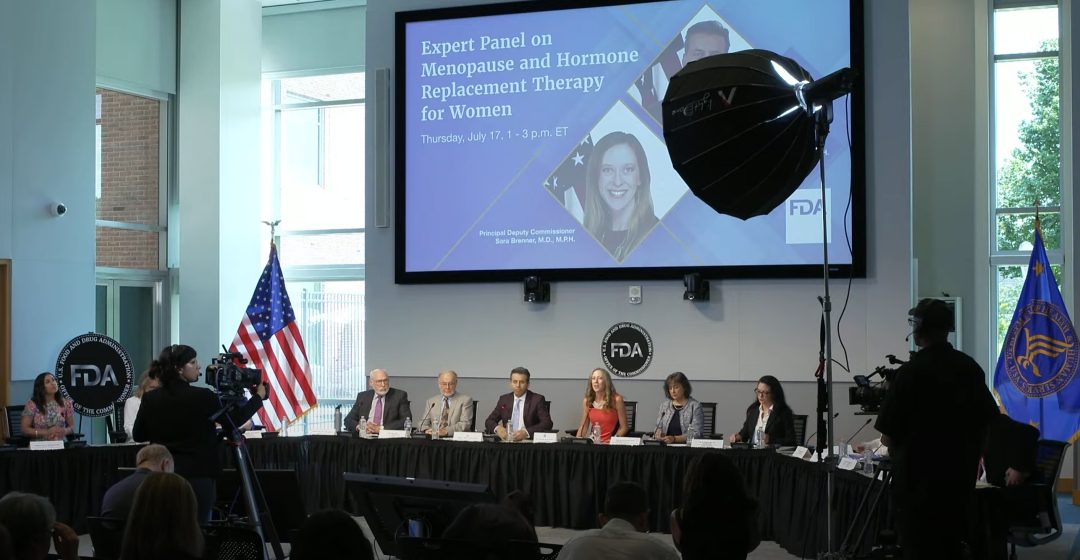
On July 17, 2025, the U.S. Food and Drug Administration (FDA) hosted a landmark expert panel to address longstanding controversies surrounding hormone replacement therapy (HRT) for menopause. The roundtable, held at the FDA’s White Oak campus and featuring preeminent clinicians and researchers, became a focal point for debate over the future of menopause care in America—and particularly, whether it is time to retire the decades-old “black box” warnings that have long constrained the use of HRT.
Reassessing the Risks: The Legacy of the Women’s Health Initiative
Central to the day’s discussion was the legacy of the 2002 Women’s Health Initiative (WHI), a landmark study that indelibly shaped clinical and public perceptions of HRT. The WHI found a modest elevation in breast cancer and cardiovascular risk with a specific combination of estrogen and progestin. The ensuing regulatory backlash led to “black box” warnings on nearly all HRT products—ensuring that physicians and patients alike would approach the treatment with caution, if not outright fear. The consequence, attendees noted, was a dramatic fall in HRT use and, by extension, symptom relief and potential broader health benefits for tens of millions of women.
FDA Commissioner Dr. Marty Makary opened the panel by contextualizing this “paradox of progress”: while subsequent analyses and decades of additional study have failed to confirm an increase in breast cancer mortality associated with HRT, regulatory policy has lagged far behind the science. “As a result of the fear of breast cancer, 50 million-plus women have not been offered the incredible potential health benefits of hormone replacement therapy,” he said, setting a candid tone for what followed.
Evidence and Experience: What Has Changed?
Presenters at the roundtable, whose expertise spanned gynecology, endocrinology, cardiology, orthopedics, and neurology, brought both technical acumen and deep empathy. They systematically rebutted the persistent myths about modern HRT—now available in widely differing forms, doses, and delivery mechanisms compared to those studied in the WHI.
Key messages included:
- Not all HRT is created equal. Today’s low-dose vaginal estrogen, used for local symptoms like dryness and urinary discomfort, likely poses no increased risk of breast cancer or cardiovascular disease—yet current labels offer no such distinction, applying the same severe warnings as to systemic therapies.
- Timing is critical. Initiating systemic hormone therapy within ten years of menopause appears to maximize benefits and minimize risks, including providing meaningful reductions in fatal heart attacks (estimates as high as a 25% to 50% reduction), osteoporosis-related fractures, and possibly cognitive decline.
- Nuanced evidence. While systemic HRT is not risk-free, the vast majority of serious adverse events seen in earlier studies arose in women who began therapy later in life, or who were treated with older formulations not in common use today.
The panel went beyond statistics, using case accounts to spotlight women suffering needlessly from hot flashes, night sweats, and other disruptive symptoms—often after being denied HRT by cautious or poorly informed physicians.
The Human Cost of Regulatory Inertia
Over and over, panelists lamented the ripple effects of the FDA’s warnings. “I am begging the FDA, and all of us are begging: please remove the box label,” pleaded Dr. JoAnn Pinkerton, echoing a sentiment that quickly became a refrain throughout the meeting.
Orthopedic surgeon Dr. Vonda Wright argued that no other therapy—drug or otherwise—offers such a dramatic reduction in bone fractures for postmenopausal women, stressing that gains are erased once HRT is stopped and bones quickly return to baseline risk. Dr. Roberta Diaz Brinton, a leading neuroscientist, described compelling imaging and laboratory data linking the loss of estrogen during menopause to increased risk for Alzheimer’s disease, particularly when HRT is not initiated in a timely manner. In effect, regulatory “over-caution” is costing women not only quality of life, but also years of healthy life and independence.
Dr. Kelly Casperson, a urologist and advocate, spotlighted a double standard: testosterone is widely approved for male hypogonadism, but U.S. regulators have yet to approve even a single female-specific testosterone product—despite clear need and widespread off-label use. This gender gap, she argued, is emblematic of broader disparities in how women’s hormonal health is treated in U.S. medicine.
Toward Evidence-Based, Personalized Care
The consensus from the roundtable was clear and loud: menopause therapy policy must catch up to the science. Panelists called for the following reforms:
- Immediate removal or radical revision of black box warnings on local (vaginal) estrogen products—and eventual overhauls for systemic HRT, so labeling accurately reflects contemporary data.
- Greater investment in education for both clinicians and patients, to dispel persistent but unfounded HRT fears.
- Stronger focus on timing (“the critical window” hypothesis) to ensure maximum benefit and minimal risk from HRT.
- Recognition of menopause and its treatment not just as a gynecological issue, but as a population health priority with lifelong consequences in cardiac, orthopaedic, neurologic, and sexual health.
The Significance of the Panel
While several FDA advisory panels have addressed hormone therapy over the years, this 2025 meeting marked a notable pivot in tone and agenda. The strong, near-unanimous calls for specific regulatory change—backed not only by primary research but by lived clinical experience—make it likely that both labeling and clinical guidelines will look different in the near future.
At stake is not just the technical content of warning labels, but how menopause itself is understood: as either a normal, manageable transition or a medical “problem” marked by fear, confusion, and lost opportunity.
Looking Ahead
For millions of women in or approaching menopause, the FDA’s panel signals the possibility of a future in which treatment options are guided by personalized, up-to-date evidence—not decades-old headlines. As Dr. Makary summed up, the goal is for every woman to have accurate information and genuine choice when it comes to hormone therapy.
If the panel’s advice is heeded, July 2025 may be remembered as the moment when medicine, policy, and gender equity finally converged to transform menopause care for good.